Memory Isn't a Source: Inside the Verification Room of an Indie Doc
Somewhere on nearly every independent documentary's hard drive there is a folder that will never appear in the credits. It holds scanned property records, screenshots of deleted social posts, timestamps pulled off bodycam footage, a spreadsheet of dates that don't quite line up, and a Word document titled something like "questions_for_subject_v4."
That folder is the fact-checking room. It doesn't have a door, because it usually isn't a room.
The Department That Doesn't Exist
A national newsroom has a standards desk. A studio has legal. An indie doc has a director, a producer wearing four hats, and — if the budget allows — a freelance clearance reviewer billing by the hour somewhere in the middle of the night.
That asymmetry matters, because documentaries make factual claims constantly, in voiceover, in titles, in the architecture of what gets included and what gets left out. And unlike a newspaper, a film has no corrections box. Once it's in the DCP, it's in.
Memory Is Testimony, Not Evidence
Most independent docs begin with a person telling you something happened. That's the whole engine of the form. It's also the least reliable input you can build on.
Experienced producers learn to treat interviews less as facts and more as claims requiring support. What year was the eviction? Which month did the letter arrive? Who else was in the room? Can we find the letter?
The answer is often no. People keep almost nothing. They misremember the order of events, compress two years into one, and recall conversations with total confidence that the phone records quietly contradict. None of that means they're lying. It means memory is a narrative device, and documentaries are built out of narrative devices.
So the practical work becomes triangulation. If a subject says the plant closed in March, you look for a newspaper clip, a union notice, a WARN filing, a Facebook post from a cousin. Three soft sources pointing the same direction can carry a scene. One hard document can carry a whole sequence.
The Freelance Reviewer on the Other End of the Line
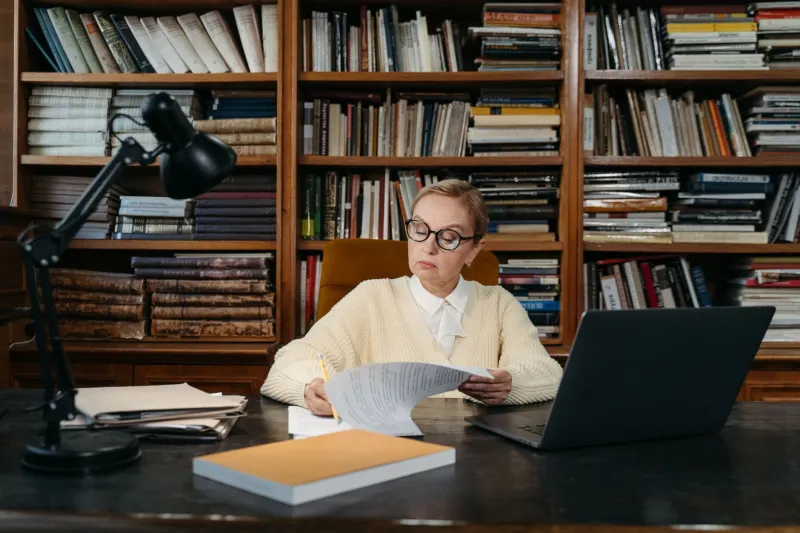
Once a film is close to finished — usually right before a festival submission or a distribution deal — someone has to look at it the way a lawyer would. That someone is often a freelance production counsel or a clearance specialist, paid a flat fee to watch a screener and produce a memo.
The memo is rarely gentle. It flags defamation risk in how a private person is described. It questions whether that archival news clip is really fair use or just convenient. It asks whether the release form actually covers the scene where the subject's minor nephew wanders into frame. It notes that a title card says "the only," and "the only" is a factual claim that must be provable.
For filmmakers, the first memo is a specific kind of bad afternoon. For errors-and-omissions insurers and distributors, it's table stakes. Most reputable distributors won't touch a documentary without a clearance report naming every third-party asset in the cut, down to the poster on the wall.
Timelines, Paper Trails, and the Court of Public Opinion
Even with a clean legal review, films can be factually wrong in ways no lawyer catches. That's the part the spreadsheet is for.
Good fact-checking on an indie doc typically looks like this: a master timeline built in a shared doc, each claim tagged to a source, each source rated by type — document, recording, on-record interview, secondhand. Voiceover gets read aloud line by line against that master. Names, titles, ages, and dollar figures get checked twice, because those are the details audiences and journalists pounce on.
And then there's the harder category: the claims only one person makes. The producer's decision there isn't usually legal. It's editorial. Do you attribute it clearly on screen? Do you cut it? Do you keep it and accept that someone will call it out?
When the Story and the Record Disagree
The worst version of this job is discovering, three weeks before a premiere, that a load-bearing fact is wrong.
It happens more than anyone admits. A date gets corrected and suddenly the sequence that seemed so elegant doesn't make sense. A document surfaces that contradicts a subject's account, and the subject, when confronted, says the document is the lie. Sometimes they're right. Records are not sacred either; they're written by people with agendas and clerks with bad handwriting.
What separates a careful film from a careless one isn't the absence of errors. It's whether the filmmakers went looking, whether they asked the follow-up, whether they gave the person a chance to respond on the record, and whether they were willing to blow up their favorite scene when the evidence didn't hold.
After the Premiere
Here's the part nobody prepares you for: the checking doesn't stop when the credits roll. Audiences now fact-check in public, in real time. A Reddit thread can dismantle a timeline over a weekend. A local reporter in the town where you shot may know the story better than you do, and may be happy to say so.
The indie docs that survive that scrutiny tend to share a habit — they kept the folder, they kept the receipts, they can tell you exactly why a scene says what it says. It's unglamorous work with no awards category. But it's the difference between a film that holds up and a film that only holds up until someone starts asking questions.