Camera in the Room: When Independent Documentarians Become the Story
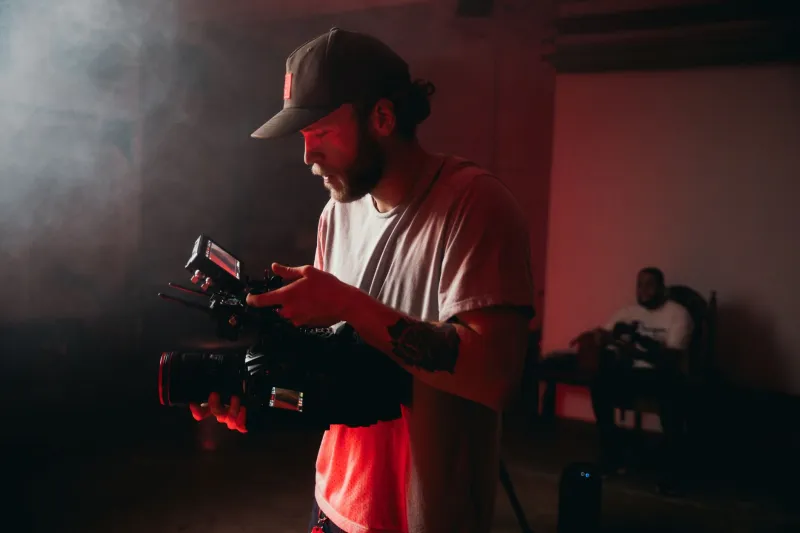
I’ve been thinking about a particular kind of documentary discomfort. It happens when the filmmaker is clearly not outside the story. They’re in the frame, in the argument, in the room when the family secret lands. The camera shakes a little. The voice behind it asks a question it maybe shouldn’t. You feel the ethical friction, and you keep watching.
The Observer Was Never Neutral
Cinema vérité sold us a useful myth: the fly on the wall. But walls have ears, and cameras change rooms. Participatory documentary — work where the filmmaker is a character, a catalyst, or a community member — has been around for decades. Ross McElwee turned his love life into a Civil War road movie in Sherman’s March. Sarah Polley interrogated her own family in Stories We Tell. Bing Liu filmed his friends and himself in Minding the Gap. These are not new experiments. They are part of a longer argument about who gets to tell a story and from how close.
This Year’s Festival Circuit Made It Harder to Ignore
At Sundance and True/False this year, a cluster of independent docs put the filmmaker’s body, voice, and relationships at the center. Some were diaristic. Some were community portraits made by insiders. Some were hybrid essays where the act of filming became the plot. The common thread was not a style but a negotiation: the camera as access, the camera as burden, the camera as confession.
That shift makes sense. Audiences are skeptical of authority. A distant narrator can feel like a press release. A filmmaker who admits their stake can feel more honest, even when they are performing honesty. The participatory frame offers intimacy and immediacy. It also raises the stakes of every edit.
The Ethics Get Messy Fast
When the filmmaker is the subject, consent becomes a moving target. A community member may agree to be filmed in March and regret it in October. A family member may understand the project differently once they see the cut. The filmmaker holds the final edit, and that power does not disappear because the camera is pointed inward.
There is also the therapy problem. Self-documentary can be a genuine artistic inquiry, but it can also become a public processing session where the audience is asked to witness without enough context. The difference is usually craft: a clear question, a willingness to be unflattering, and an awareness that other people in the frame did not sign up to be supporting characters in someone else’s healing arc.
Honesty or Performance?
The cynical read is that participatory docs are just another performance of authenticity. The filmmaker chooses the angle, the music, the edit. They can play the villain, the victim, the seeker. Every self-portrait is a construction. But that does not make it false. All documentary is constructed. The participatory mode simply makes the construction visible.
The more interesting question is whether the film earns its intimacy. Does it reveal something beyond the filmmaker’s own reaction? Does it give the other people in the room their own complexity? Does it acknowledge the camera as a presence rather than pretending it is a window?
The Audience’s Role
Participatory docs also ask something of us. We are not just watching a story; we are watching someone decide how to tell it. That can be thrilling, and it can be exhausting. The mode invites us to judge the filmmaker’s choices in real time: why did they keep rolling? Why did they cut away? Why are they telling us this now?
That self-consciousness can be a feature. It keeps the audience alert to the machinery of storytelling. But it can also become a loop, where the film is more interested in its own ethical dilemma than in the people living it. The best work avoids that trap by making the filmmaker’s presence a doorway, not a destination.
The Camera Is a Relationship
The best participatory docs do not pretend to solve the ethics. They sit in the mess. They show the filmmaker asking for access, being refused, changing their mind, apologizing. They let the camera be a relationship rather than a cloak of objectivity.
That is why the trend matters beyond the festival bubble. Independent documentary is often described as a window. Participatory work reminds us that windows have frames — and sometimes the person holding the frame is standing inside the house. The story is not just what the camera sees. It is what the camera changes by being there.