The 9 P.M. Cut: How Broadcast Compliance Quietly Rewrites an Indie Doc

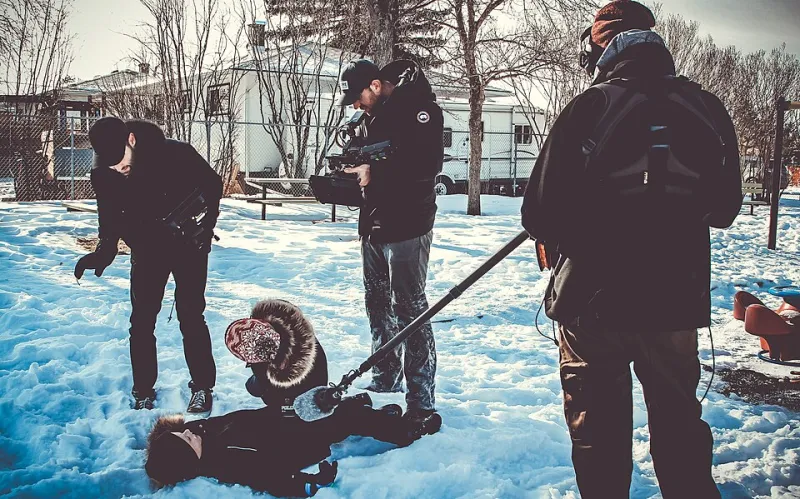
Photo: Project Kei, CC BY-SA 4.0, via Wikimedia Commons
There is a version of an independent documentary that almost nobody talks about at the Q&A. It is not the festival cut, not the director's cut, and not the version that played for one week in a Brooklyn theater. It is the broadcast cut — the one that airs on a US television network after a standards-and-practices team has gone through it frame by frame, line by line, claim by claim. For filmmakers, this pass can feel like a second post-production, except the notes arrive with legal weight and a deadline.
The Pass Nobody Budgets For
Most indie doc budgets include a line for color, sound, and maybe a QC pass. They rarely include serious money for a broadcast compliance edit. That is because the pass usually happens after the film is "finished" — after sales, after the streaming window, after everyone has moved on to the next project. A distributor licenses the film to a network, and the network's standards team sends back a document that can run dozens of pages. Some notes are obvious: blur a tattoo, mute a curse, cut a phone number on a cocktail napkin. Others are philosophical: soften the narrator's assertion, remove the word "proven," add a context card, trim a scene that drags past the hour mark.
The filmmaker is often not in the room. The distributor relays the notes. The editor, if there is budget to bring one back, starts making choices under pressure. This is where a documentary's meaning can start to drift.
Blur Is an Argument
A blurred logo looks like housekeeping. It is not. When a network blurs a brand on a character's T-shirt or a storefront sign, it is managing legal exposure, not just taste. But the effect on the film is real: the world of the story becomes slightly abstract. A documentary about a neighborhood loses the specific bodega. A film about labor loses the company name on the uniform. The viewer may not notice, but the film notices. Specificity is part of its evidence.
Bleeps work the same way. A bleeped word can keep a scene on air, but it also turns speech into rhythm. A subject's rage becomes a series of gaps. Sometimes that is acceptable. Sometimes it flattens the moment into comedy. The craft question is not whether to bleep, but what the bleep replaces. If the word was the point, the scene may need to go. If the word was texture, the bleep may survive.
The Runtime Math
Broadcast slots are unforgiving. A film that runs 94 minutes may need to land at 86, and the missing eight minutes have to come from somewhere. Filmmakers often assume the trims will hit credits or establishing shots. Compliance teams usually have other ideas. They may flag a scene that includes an unverified claim, a prolonged shot of a minor, or a sequence that could read as instructional. The runtime trim becomes a content edit in disguise.
One editor described the process as "cutting for two audiences at once" — the viewer at home and the lawyer in the room. That is not cynicism. It is the job. But it means the broadcast cut can lose the very ambiguities that made the film interesting. A long pause becomes a short one. A contradiction gets smoothed. A question mark becomes a period.
Softened Claims, Hard Questions
Standards teams are not fact-checkers in the journalistic sense, but they do care about claims that could trigger complaints or legal action. A documentary that says a company "covered up" a problem may be asked to say the company "did not disclose" it. A film that says a drug "causes" a condition may be asked to say it "has been linked to" it. These changes can be defensible. They can also be a way of making a film less specific without making it more accurate.
The filmmaker's leverage depends on the contract. Some deals give the network final cut for broadcast; some preserve the director's credit but not control. The negotiation is rarely dramatic. It happens in emails about a single sentence. But by the time the film airs, that sentence may be the one the audience remembers.
Who Signs Off
The broadcast cut is usually approved by the network's standards department, the distributor, and sometimes the filmmaker's lawyer. The director may get a courtesy screening. They may not. This is the invisible labor of the long tail: the film keeps getting finished after it is finished.
For audiences, the broadcast version may be the only version they ever see. That makes the standards pass more than a footnote. It is part of the film's life. The blur, the bleep, and the trimmed scene are not outside the story. They are the story, arriving in a form the filmmaker did not entirely choose.
The Version You'll Never See
None of this means broadcast is the enemy. Networks have rules, and those rules keep difficult films on air. But it does mean that when a documentary shows up on television, it is worth asking what changed. The credits may be the same. The title may be the same. The frame may look almost identical. What shifted is the room the film had to fit into.
Behind the visible image is a paper trail of notes, calls, and compromises. The broadcast cut is where that trail becomes the movie. It is the version you watch at 9 p.m. — and the one the filmmaker may still be thinking about at midnight.