What the Budget Kills First: The Line Producer’s Invisible Edit
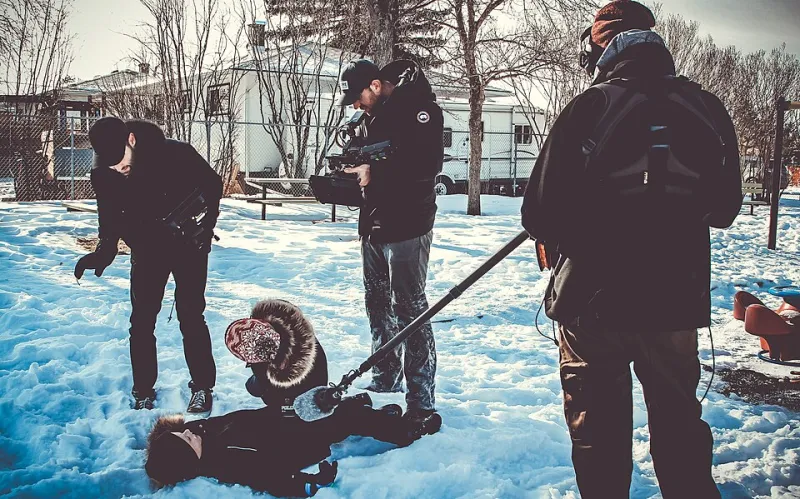
Photo: Geordiedouglasday, CC BY-SA 4.0, via Wikimedia Commons
The First Cut Happens in a Spreadsheet
Before a director calls “action” on an independent documentary, someone is staring at a budget with a highlighter. That person is usually the line producer, and the document in front of them is not just a money plan. It is a rough draft of the movie.
A line item can decide whether the crew flies to a second location or interviews the subject by video call. A per diem can determine whether the director stays one more night to catch a spontaneous family dinner. A contingency line can mean the difference between waiting out a storm and leaving with a hole in the third act. None of these choices look like storytelling on paper. On screen, they are the story.
That is the quiet tension inside indie documentary production in 2026. Everyone talks about the director’s vision, the subject’s trust, and the lucky accident. Less often do we talk about the budget as an editorial force. But the budget is often the first editor, and it works without a credit.
Geography Is a Narrative Choice
Take travel. In a fictional film, a location can be built or swapped. In a documentary, geography is usually the point. The story lives where the subject lives, where the archive sits, where the protest happens, where the water rises.
A line producer has to ask brutal questions early: Can we afford two trips or one? Can we afford a fixer in a region where we do not speak the language? Can we afford the insurance rider for a high-risk location? If the answer is no, the film does not simply lose a pretty backdrop. It loses access to the moments that only happen when a crew stays long enough to stop being a novelty.
This is where a budget becomes an invisible narrative limit. A documentary about a family across two states may become a documentary about one state, with phone calls standing in for the other. A film about a vanishing trade may lean harder on archival material because the crew cannot afford to wait for the last workshop to reopen. Those are not failures. They are compromises, and they leave fingerprints on the final cut.
Crew Size Changes the Room
There is a practical math to crew size. More people means more capability: a dedicated sound recordist, a second camera, a producer who can handle releases while the director stays present. It also means more chairs, more meals, more hotel rooms, more airfare, more personalities in a small room.
For intimate documentaries, the smaller crew is often the better creative choice. A two-person team can disappear into a kitchen. A five-person team can turn a quiet argument into a performance. But the smaller crew is also the cheaper crew, and that overlap matters. When a line producer trims the sound department to make the budget work, the film may gain intimacy and lose audio quality. When they cut the second camera, the film may gain focus and lose the ability to catch the reaction shot that would have carried the scene.
These are not abstract tradeoffs. They are the kind of decisions that show up in a festival Q&A when someone asks why a key conversation happens off-screen. Sometimes the answer is ethical. Sometimes it is logistical. Often it is both, and the budget is the reason the camera was not in the room.
The Schedule Is a Story Constraint
Documentary schedules are built on optimism and then revised by reality. A line producer plans shoot days, travel days, and contingency days, knowing that real life does not call ahead. A subject gets sick. A courthouse delays a verdict. A wildfire closes a road.
In 2026, with production costs still uneven and distribution deals cautious, contingency is not a luxury. It is the thing that lets a director say yes when the story suddenly opens a door. A film with three contingency days can wait for the funeral, the ruling, or the reunion. A film with none has to leave. The difference is not visible in the credits, but it is visible in what the audience never gets to see.
Schedule also shapes access. If a line producer can only budget a five-day shoot, the subject learns that the crew is a visitor. If they can budget three shorter trips across a year, the film can show change. That choice is financial before it is dramatic.
The Invisible Post-Production Bill
Budget decisions made before the camera rolls also echo in post. Archival licensing, music clearances, E&O insurance, color, sound mix, and deliverables all compete for the same pool of money. A line producer who underbudgets archival research may force the editor to build around gaps. A producer who does not plan for a fair-use review may watch a scene get pulled late in the process.
This is why the line producer’s early work is not just about surviving production. It is about protecting the film’s ability to finish honestly. The best budgets are not the ones that spend the most. They are the ones that leave enough room for the unpredictable thing the documentary is actually about.
Who Gets to See the Constraint?
Most audiences will never see the spreadsheet. They will see a finished film that feels inevitable, as if the story could only have been told this way. But every indie doc is a record of choices, and many of those choices were made by someone balancing a checkbook before the first frame.
That does not make the film less true. It makes it more human. The next time a documentary feels strangely contained, or unusually patient, or missing a scene you expected, remember the line producer. The budget may not get a credit, but it helped write the movie.