The Uncredited Crew: What Local Fixers Actually Do for an Indie Doc
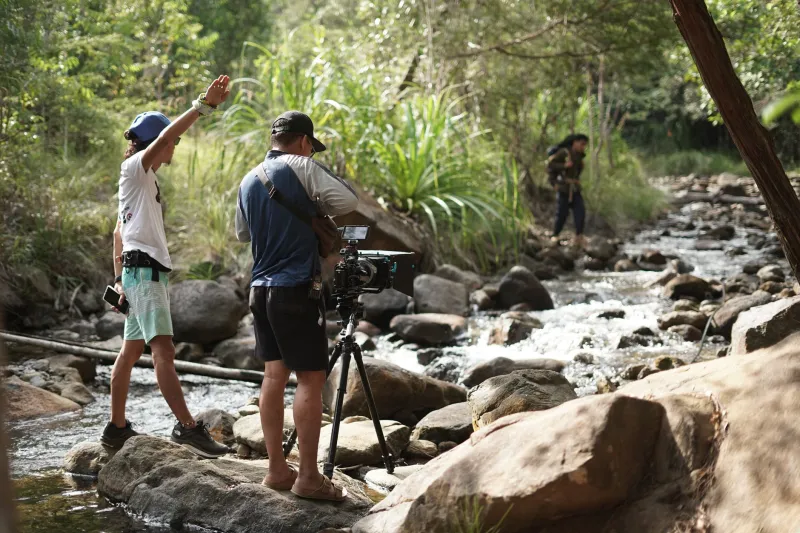
There is a moment in every overseas documentary shoot when the director exhales, looks around, and says, "Okay — we're good." What they usually mean is: the fixer is good. The permit is real, the subject showed up, the translator isn't improvising, and nobody is going to spend the night in a holding room.
That exhale is the product of invisible work. And in independent documentary, where a two-person crew and a rented mirrorless body often pass for a full unit, the fixer is the closest thing the production has to infrastructure.
Seven Jobs That Happen Before "Action"
The fixer's title varies — local producer, field coordinator, production service, sometimes just "our friend in Nairobi." The job description is a lot wider than the invoice suggests.
Access brokerage. Fixers don't just know who to call; they know who will actually pick up. In many countries, a formal request letter is theater — the real permission comes from a district officer, a community elder, or a hospital administrator who trusts the person standing in front of them. That trust is capital, and it gets spent on your behalf.
Translation that isn't just language. A good fixer translates intent. They know when a subject is being polite rather than honest, when a joke is actually a deflection, and when a phrase has no clean English equivalent. The subtitle you read two years later in a festival theater starts with that judgment call.
Safety and risk mapping. This is the part that gets skimmed. Route planning, curfew knowledge, knowing which checkpoint is a formality and which one isn't, understanding that filming near a certain market will draw a crowd that turns into a problem. None of it shows up in the shot; all of it shapes whether there is a shot.
Permit and institutional navigation. Film commissions, ministries, local police, land authorities. In the US, a documentary team might negotiate one permit and call it a day. Abroad, it's often a stack of overlapping approvals, each with a different office and a different mood.
Crew assembly and logistics. Vans, drivers, sound recordists who own their own gear, someone's cousin with a gimbal. Fixers build a crew from a local network in days that would take a foreign production weeks to assemble from scratch.
Cultural and editorial guardrails. Many fixers quietly steer directors away from framing that will read as exploitative back home. That advice is editorial, whether or not anyone acknowledges it.
Post-shoot continuity. Follow-ups, additional footage, a subject who wants to talk again in six months. The fixer is often the only number that still works.
Why the Credit Line Stays Blank
Part of it is budget fiction. American indie documentaries run lean, and "production services" is an easier line to trim than post. Part of it is optics: a director wants to look like they were embedded, not escorted. And part of it is plain distance — once the footage is in the edit bay in Brooklyn or Austin, the people who made it possible are 6,000 miles away and easy to forget.
The result is a class of contributors who function like producers and get thanked like caterers. Occasionally a fixer gets a "Local Fixer" credit in the crawl. Rarely do they get a producing credit, an IMDB listing that reflects the scope of the work, or a share of anything if the film sells.
A Fairer Line in the Budget
For US documentary teams planning 2026 shoots, a few practices are worth building in from the start.
- Budget fixer fees as production labor, not petty cash. A daily rate is normal. A flat rate with a scope that expands silently for three months is not.
- Pay for prep. The weeks of calls before the shoot are the work. If the budget only covers days on the ground, you are subsidizing your film with someone else's unpaid time.
- Negotiate credit early and in writing. Decide whether the fixer is a coordinator, a producer, or a consulting producer, and say so in the deal memo — not in a text six weeks before the premiere.
- Cover their exposure. Insurance, equipment they own on set, and a clear plan if something goes sideways. A fixer who gets into a dispute with local authorities is not covered by your domestic policy.
- Build in a post-credit. A line in the end credits that names the specific region or institution, not just "production services." It costs nothing and means something.
What Gets Lost in the Logistics Label
Treating fixers as logistics also flattens the film. When the person who understands a community is only consulted about vans, a director ends up with beautiful footage of a place they never really reached. The scenes that make an independent documentary feel true — the unguarded comment, the door that opens, the subject who trusts the camera — usually come from a relationship the fixer built long before the camera was unpacked.
Every film is an extraction of some kind; the question is what goes back. A credit line and a fair rate are the floor. The ceiling is remembering that the fixer is often the first reader of your story — and the only one still standing in the place you filmed after you've gone home.