The House Lights Stay On: The Unseen Work of the Documentary Long Tail
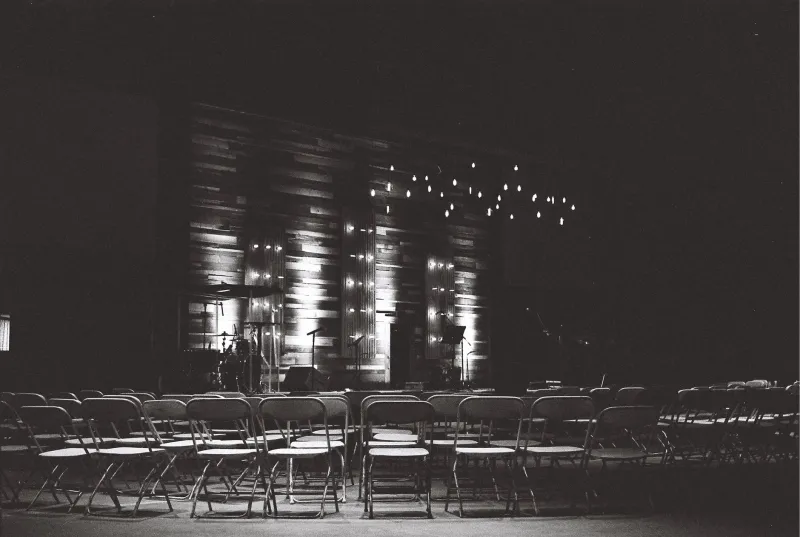
The festival hangover is real. There is the closing-night party, the group photo, the brief flush of messages from programmers and sales agents. Then the film goes home. For a lot of independent documentaries, that is when the actual release begins—not in a theater with a lobby poster, but in a church basement in Dayton, a union hall outside Pittsburgh, a public library in rural Oregon, or a community college classroom with a projector that runs too hot.
The streamer thumbnail may already be live. The deal may be signed. But the film’s life as a public object is often just starting, and the people who make that life happen are usually not in the credits.
The Deal Is Not the Destination
Non-theatrical distribution sounds like a footnote to the real business of festivals and streaming. In practice, it is a whole second production. Outreach coordinators and impact producers book screenings, build community partnerships, ship screening kits, wrangle captions, and write the emails that turn a vague invitation into an actual room full of people. They work with libraries, faith groups, labor organizations, schools, and local nonprofits. Each partner has a different audience, a different calendar, and a different idea of what the film is for.
That last part is the job. A documentary does not arrive in a community with its meaning fully attached. It has to be introduced, framed, and sometimes argued with. The outreach team is often translating the film without changing it—making sure a discussion about housing policy in one town does not flatten into a generic story about resilience in another.
A Release Plan Made of Folding Chairs
Every venue has its own physics. A union hall may have a great sound system and no parking. A library may have a perfect room and a rule against outside food. A church basement may have the best community turnout and a projector from 2011. The screening kit has to account for all of it: file formats, captions, audio levels, run time, and what happens if the Wi-Fi dies.
Then there is the Q&A. Sometimes the filmmaker can attend. Often they cannot. So the local host has to carry the room, and the outreach team has to prepare them without scripting them into a robot. The best non-theatrical screenings feel like a town meeting with a film attached. The worst feel like a mandatory assembly. The difference is usually labor, not luck.
The Discussion Guide Is Not an Afterthought
A good discussion guide is not a worksheet stapled to a press kit. It is a craft object. It has to open conversation without leading the witness. It has to be useful for a high school teacher in Texas, a faith group in Chicago, and a clinic staff in California without pretending those rooms are the same. It also has to be honest about what the film does not cover.
Increasingly, guides are built with trauma-informed language and accessibility in mind. That is not decoration. If a documentary deals with violence, addiction, or family separation, the screening can land differently for someone who has lived it. The guide is part of the duty of care. So is the person who trains facilitators to use it.
Who Pays for the Long Tail?
Impact work is funded in fragments: grants, fiscal sponsors, small screening fees, library licenses, and the occasional partner with a budget line. The money rarely matches the ambition. Outreach coordinators juggle spreadsheets, travel, and local politics. Filmmakers answer emails between other jobs. The campaign may run for years after the streamer has moved the title into a smaller row on the homepage.
This is the unglamorous economy of the documentary long tail. It does not produce a box office number. It produces conversations, local coalitions, classroom units, and sometimes policy attention. Those outcomes are harder to count, which is exactly why they are easy to underfund.
What Opening Weekend Can’t Measure
In 2026, the non-theatrical circuit is not a fallback. It is a parallel release strategy, and for some films it is the only place where the subject matter meets the people who live it. A screening in a church basement will not trend. It will not get a red-carpet photo. But it can put a film into the hands of someone who needed it, and that is not a consolation prize.
The screening after the screening is where a documentary either becomes useful or becomes a file. The house lights stay on longer than the credits suggest. Someone has to be there to turn them off.